
Trauma and Relationships
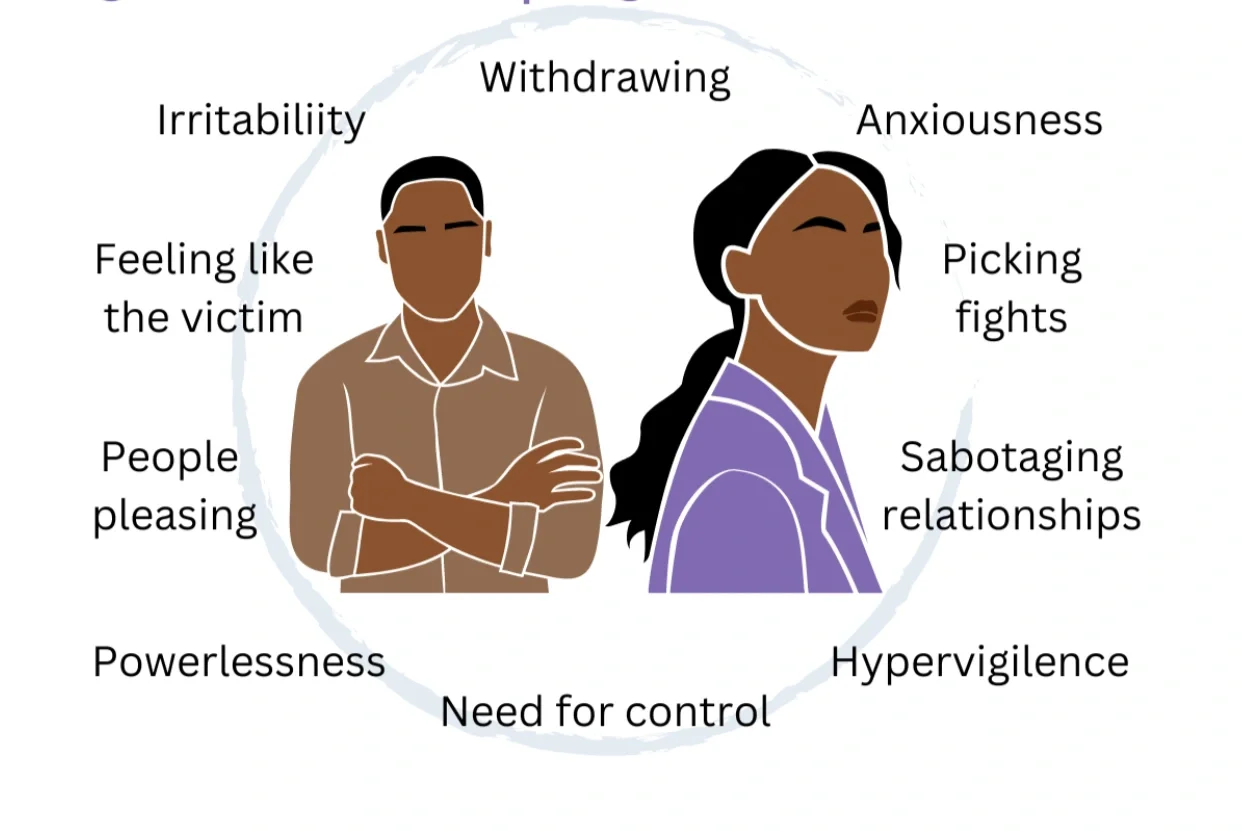
How past experiences shape connection, conflict, and intimacy
Trauma doesn’t stay neatly in the past. It often shows up most clearly in our closest relationships—with partners, family members, and even friends. Many people seek relationship counselling believing the problem is communication or compatibility, only to discover that unhealed trauma is quietly shaping how they connect, protect themselves, and respond to closeness.
Understanding the link between trauma and relationships can bring relief, compassion, and a new pathway forward.
How Trauma Enters Relationships
Trauma affects the nervous system’s sense of safety. In relationships, safety isn’t just physical—it’s emotional. When the nervous system has learned that closeness can be unpredictable, overwhelming, or painful, it adapts accordingly.
This can look like:
Fear of abandonment or rejection
Difficulty trusting even when nothing is “wrong”
Strong reactions during conflict
Shutting down, withdrawing, or becoming emotionally distant
Feeling easily criticized, controlled, or misunderstood
These patterns are not intentional. They are protective responses shaped by earlier experiences.
Trauma and Attachment
Many relational trauma patterns are rooted in early attachment experiences—times when emotional needs were unmet, inconsistent, or overwhelming. Even in loving families, children may learn to:
Be hyper-responsible
Stay quiet to avoid conflict
Please others to stay connected
Rely on themselves instead of asking for help
In adult relationships, these adaptations can resurface, especially during stress or intimacy.
For example:
One partner may pursue closeness anxiously, while the other withdraws
Conflict may feel threatening rather than resolvable
Emotional needs may feel risky to express
Understanding these patterns through a trauma lens reduces blame and opens space for empathy.
Why Conflict Can Feel So Intense
In trauma-affected relationships, conflict is rarely just about the present issue. The nervous system may interpret disagreement as danger, triggering fight, flight, freeze, or shutdown responses.
This is why couples often say:
“We keep having the same argument.”
“It escalates so fast.”
“I know it’s not logical, but I can’t stop reacting.”
When trauma is involved, reactions are body-based, not just cognitive. Awareness of this can help couples slow down and respond differently.
Trauma and Intimacy
Trauma can also impact emotional and physical intimacy. Some people long deeply for connection but feel unsafe once closeness appears. Others may disconnect from desire altogether as a form of protection.
Common experiences include:
Feeling pressure around intimacy
Difficulty staying present
Performance anxiety or shutdown
Confusion about desire and safety
These responses are not signs of failure—they are signals that the nervous system needs reassurance, not force.
Healing Trauma Within Relationships
Healing doesn’t mean blaming past experiences or reliving them repeatedly. Trauma-informed relationship work focuses on safety, regulation, and understanding.
In therapy, this may include:
Identifying trauma-driven patterns without shame
Learning to recognize nervous system responses in real time
Building emotional safety before addressing conflict
Developing new ways to repair and reconnect
Strengthening self-compassion and mutual empathy
As safety increases, relationships often feel less reactive and more secure.
A Hopeful Perspective
Trauma can shape relationships—but relationships can also be a powerful place for healing. With awareness and support, partners can learn to move out of survival mode and into connection, choice, and trust.
Healing happens not by becoming perfect partners, but by becoming more present, more regulated, and more understanding—both with yourself and with each other.

Hi, I’m Mahsa, therapist based in Langley, B.C. I’m here to help you feel better.
Many relationship struggles make sense when viewed through a trauma-informed lens. In therapy, we slow things down, reduce blame, and focus on creating emotional safety. Whether you’re coming in as an individual or as a couple, we work gently and collaboratively, honouring your pace and your story.
— Mahsa
Roma Villa Counselling
Let’s connect